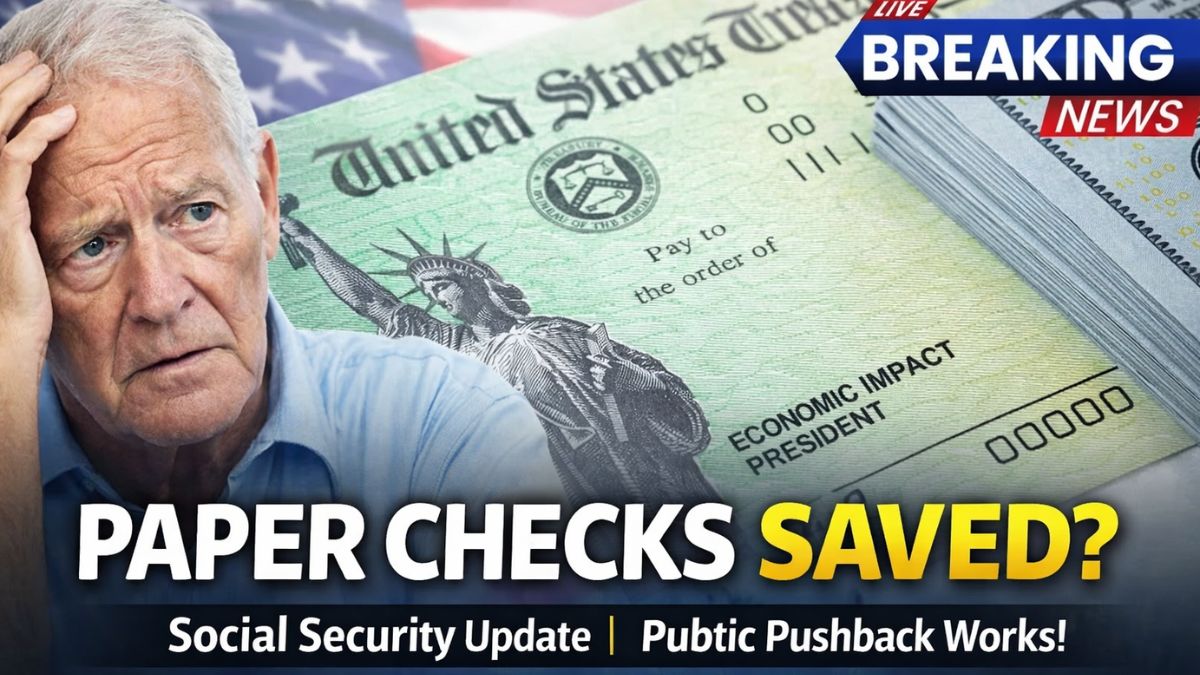
The federal government has recently softened its earlier plan to completely end Social Security paper checks, after weeks of strong messaging that physical payments would soon stop. Officials had previously described the move to electronic-only payments as final and unavoidable. However, after feedback and concerns from retirees, advocacy groups, and rural communities, the government is now quietly stepping back from a strict deadline. This change has started a wider conversation about how modernization should work when many people still depend on traditional systems.
For millions of Americans, Social Security is not just another payment. It is their main source of monthly income. Any change in how that money is delivered can directly affect their daily lives. The reconsideration shows that while digital systems are efficient, they are not always practical for everyone.
Why the Government Wanted to End Paper Checks
The original plan to phase out paper checks was based on efficiency and security. Electronic payments through direct deposit or prepaid debit cards are faster to process and cost less to manage. They also reduce the risk of lost or stolen checks and help prevent certain types of fraud. Government agencies have been working toward digital payment systems for many years, and most beneficiaries already receive their money electronically.

Officials believed that moving fully to digital delivery would simplify administration and reduce long-term costs. Earlier policies already required most new beneficiaries to use electronic payments, while older recipients were allowed to continue receiving checks through exemptions. As new deadlines approached, the expectation was that the remaining paper-check users would switch over.
But that transition has not been as smooth as planners expected.
Many Seniors Still Depend on Paper Payments
A significant number of older beneficiaries still rely on paper checks. For them, switching to digital payment is not just a small change. In some cases, it feels risky or confusing. Some seniors do not use online banking. Others do not own smartphones or computers. There are also people living in rural areas where internet service is weak or unreliable.

Paper checks offer something digital systems cannot fully replace: familiarity and physical proof. Many recipients feel more comfortable holding a check, recording it, and depositing it in person. It gives them a sense of control and certainty. Some have also experienced past issues with electronic deposits, such as wrong account numbers or bank processing errors, which made them cautious about depending fully on digital systems.
Advocacy organizations argued that removing paper checks too quickly could put vulnerable people at risk of delayed or missed payments. Since Social Security benefits often cover essential needs like food, rent, and medicine, even a short disruption could be serious.
Pushback Forced a Policy Pause
Public response played a major role in the government’s decision to slow down. Community groups, senior advocates, and local support organizations reported that many beneficiaries were not ready for a forced switch. Some did not understand the notices they received. Others needed personal help to change their payment method but had limited access to assistance.

The strong reaction highlighted a gap between policy goals and real-world conditions. While digital payment works well for most people, it does not work equally well for all. Officials now appear to recognize that setting strict final deadlines without enough support systems in place could create hardship.
Instead of ending paper checks completely right away, the government is now expected to allow more time and flexibility. That may include extended exemptions and additional outreach to help people transition safely if they choose to do so.
The Larger Issue of Digital Access
This situation reflects a broader challenge known as digital inequality. Not everyone has equal access to technology, banking services, or digital education. Lower-income seniors are especially likely to face barriers. Some do not trust online systems. Others worry about scams, hacking, or identity theft.

Digital literacy is another factor. Even when tools are available, not everyone feels confident using them. Filling out online forms, managing passwords, or setting up bank links can be stressful for someone who has never used such systems before.
Modernization efforts often assume that digital access is universal, but real-life experience shows that this is not yet true. The debate over Social Security paper checks is one example of how policy changes must consider human factors, not just technical advantages.
What This Means for Current Beneficiaries
For now, beneficiaries who still receive paper checks are unlikely to see an immediate cutoff. The government’s quieter tone suggests a slower and more flexible approach going forward. Recipients should still review their payment preferences and make sure their contact information is up to date in official records.
यह भी पढ़े:
 When Could Your Payment Arrive? Who Qualifies for the $2,000 Direct Deposit in February 2026
Electronic payment options will continue to be encouraged because they are faster and generally safer. However, people who cannot reasonably switch are expected to keep access to paper checks, at least in the near term. More education and support programs may also be introduced to help those who want to transition but need guidance.
It is important for recipients to pay attention only to official communications and not rely on rumors or social media posts. Any real change in payment policy is normally announced clearly through formal letters and government channels.
Finding a Balance Between Modernization and Inclusion
The current pause shows that modernization must be balanced with inclusion. Digital systems can improve speed and reduce cost, but public programs must serve everyone, including those with limited resources or technical skills. A hybrid system, where electronic payments are standard but paper checks remain available by exception, may be the most practical solution.
यह भी पढ़े:
 IRS Refund at IRS.gov: Know the Exact Number of Days It Takes to Receive Your Income Tax Refund
Policymakers are learning that change works best when it is gradual, supported, and flexible. Programs that affect basic income require extra care because the stakes are high for the people who depend on them.
Disclaimer
This article is for general informational purposes only and is based on publicly discussed policy developments and reported trends. It is not official government guidance and should not be taken as legal or financial advice. Beneficiaries should always rely on official government communications and verified sources for the most accurate and up-to-date information about Social Security payment methods and policy changes.